





 Algeria
  Bahrain
  Egypt
Egypt  Iran
Iran  Iraq
Iraq  Israel
  Jordan
  Kuwait
  Lebanon
  Libya
Libya  Morocco
  Oman
Oman  Palestine *
  Qatar
Qatar  Saudi Arabia
  Syria
Syria  Tunisia
  United Arab Emirates
 DIEM Workshop on Bridging Cultural Heritage Academia and the Market held in Egypt


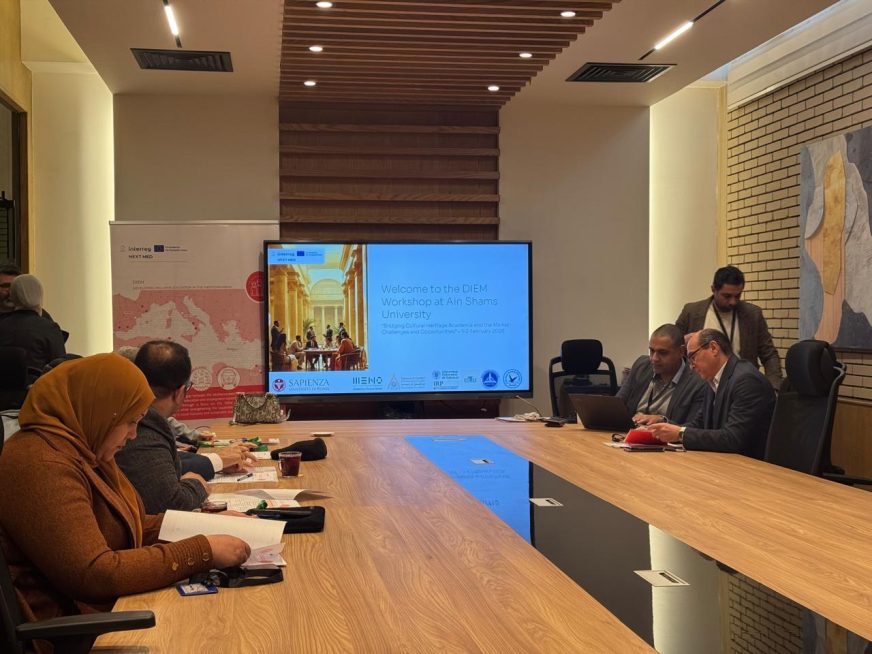
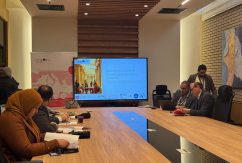
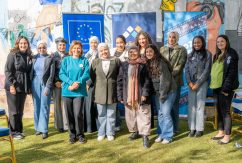
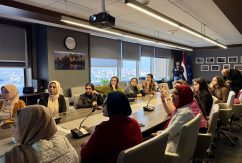
DIEM’s Egyptian partner hosted the workshop “Bridging Cultural Heritage Academia and the Market: Challenges and Opportunities” on 1-2 February 2026 at the Faculty of Engineering of Ain Shams University in Cairo.
Structured across three thematic parts – experts, museums and sites, and market stakeholders – the workshop fostered a multi-level dialogue on the main gaps between education, practice, and employment in the Cultural Heritage sector. The event gathered a wide range of participants from academia, cultural institutions, and industry, including Prof. Dr. Aly Abdel-haleem, Prof. Dr. Mamdouh El-Damatiy, Dr. Hamdy EL-Setoohy, Prof. Dr. Mohamed Abdel Aziz, Prof. Dr. Mahmoud Abdelbaset, Prof. Dr. Mohamed El-Seady, Prof. Dr. Tarek Walley, Dr. Shymaa Shahyeen; Prof. Dr. Ahmed Syam, Dr. Samya Hassan (Islamic Museum), Dr. Wala Magdy, Ms. Wala Mohamed (Zafraan Museum); Prof. Dr. Abdel Rahma EL-Serogy (Fayoum University); Dr. Ahmed Noqrashy (Head of Abydoos Excavation Site); Dr. Mohmed Ibrahim (President of Citadel Excavations Site); Prof. Dr. Heidi Shalaby (NOUH); Eng. Mohamed Hassan; Eng. Magdy El-Sabagh (Sigma); Dr. Mohamed Roshdy (TMG); Eng. Ibrahim El Shahed (ACC); Eng. Hania (Mentor Co.); and Eng. Ahmed Bata (S.A.E).
Day 1 focused first on academic and expert perspectives, addressing key issues such as skills mismatches, limited access to practical training (e.g. excavation sites), the need for updated technological competencies, and challenges related to governance, regulations, and intellectual property rights. Discussions highlighted the urgency of aligning curricula with professional requirements and strengthening community engagement in heritage processes. The second part of day 1 shifted to museums and heritage sites, exploring their role in capacity building. Sessions examined current practices in documentation, digital display technologies, accessibility and inclusiveness, highlighting collaboration models between universities and cultural institutions, with the aim of identifying effective and practice-based training approaches.
Day 2 expanded the discussion to business and market perspectives: industry representatives contributed insights on employability, professional training needs, and regulatory frameworks, emphasizing gaps in technical skills, health and safety knowledge, and site management strategies. Interactive working groups further developed action-oriented proposals on education, professional pathways, and innovation, including digital tools and entrepreneurship.
The workshop concluded with the definition of key recommendations, including the development of targeted training programmes and micro-credentials, the integration of digital and interdisciplinary skills, and the strengthening of cooperation between academia, cultural institutions, and the private sector. Overall, the event produced a first roadmap for future collaboration, supporting more sustainable and market-oriented Cultural Heritage management in Egypt and the Mediterranean region.
Countries covered:
-
 Egypt
Egypt