










 Algeria
  Bahrain
  Egypt
Egypt  Iran
Iran  Iraq
Iraq  Israel
  Jordan
  Kuwait
  Lebanon
  Libya
Libya  Morocco
  Oman
Oman  Palestine *
  Qatar
Qatar  Saudi Arabia
  Syria
Syria  Tunisia
  United Arab Emirates
  Yemen
Yemen 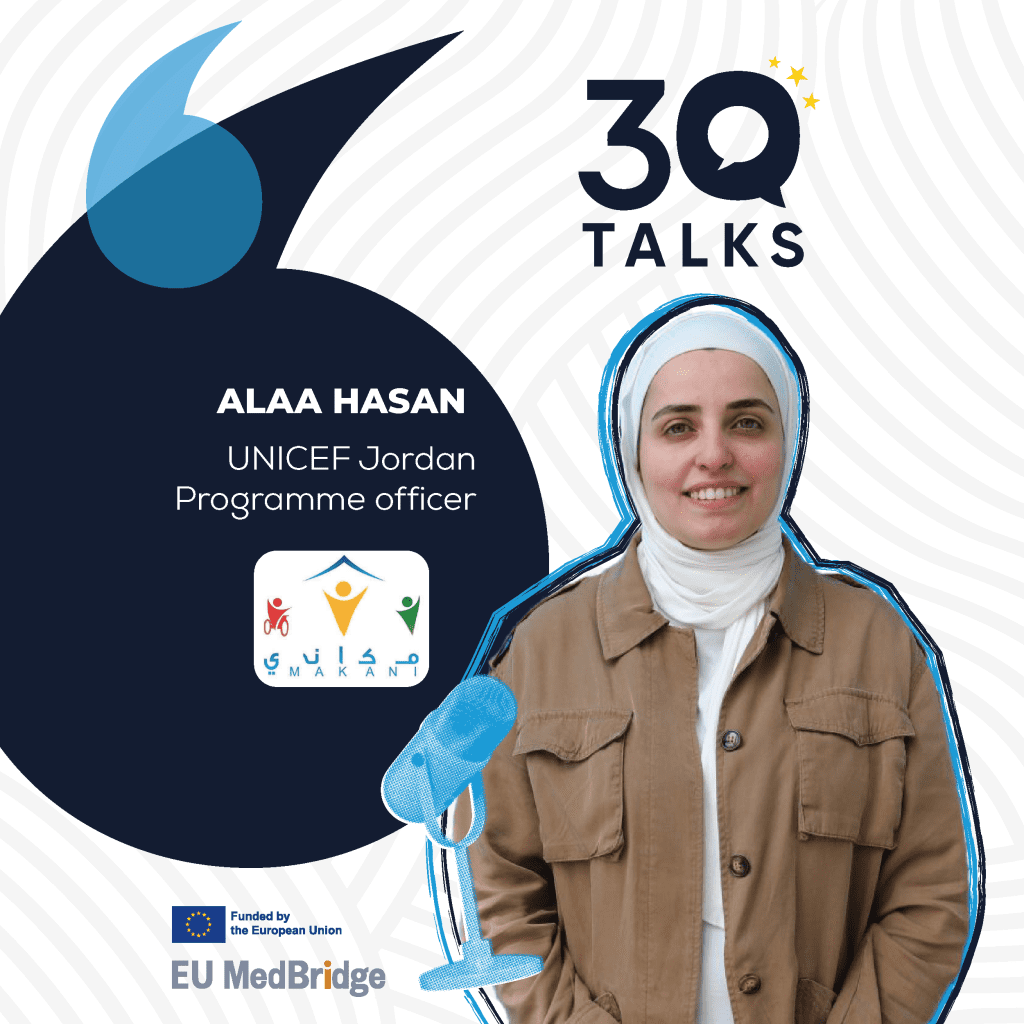 Alaa Hasan, Programme Officer at UNICEF in Jordan and lead of the Makani Programme, shares insights into how the programme provides safe and inclusive spaces for vulnerable Syrian and host community children and adolescents, offering learning support, life skills development, and protection services while helping families connect to essential national systems. With nearly 12 years of experience across monitoring, education, and social protection, she works to expand access to inclusive services that help children stay engaged in education, strengthen wellbeing, and build skills for the future, promoting resilience and opportunity for young people and their caregivers.
- What is the project about, and what impact does it aim to achieve?
The Makani programme, launched in 2015, is a nationally scaled, community‑based programme that creates safe and inclusive spaces for children, adolescents, and their caregivers living in vulnerable circumstances across all governorates of Jordan, including Syrian refugee camps and community living in rural remote locations. Makani brings together learning support, child protection, early childhood activities, skills building, and caregiver engagement in one accessible space close to where families live. The programme supports girls and boys from vulnerable backgrounds, regardless of nationality, by providing access to learning, personal development, and psychosocial support that might otherwise be out of reach. By linking families to national services and engaging caregivers, Makani helps children stay in learning, build essential skills, and navigate key life transitions safely while strengthening wellbeing and community connection. In 2025, it reached over 100,000 beneficiaries, including around 90,000 children.
- Which activities, initiatives, or opportunities offered by the project should young people know about?
Makani offers children, adolescents, and their caregivers a safe space to learn, develop, and connect. Younger children benefit from play-based activities that support early learning and social skills, while structured group sessions help older children and adolescents strengthen wellbeing, self-expression, and a sense of belonging. Learning support activities also help bridge gaps in reading and mathematics, especially for those who experienced interruptions in schooling. For adolescents, Makani builds life skills such as communication, teamwork, problem-solving, and decision-making, alongside practical skills like financial and digital literacy. Recreational activities reduce stress and encourage positive connections, while referral pathways help families access specialised services when additional support is needed. Makani is designed not only to offer activities, but to make a measurable difference in children’s lives. This is evidenced through pre‑ and post‑assessments that track changes in learning, wellbeing, and skills over time, as well as through self‑reported feedback from children, adolescents, and caregivers on their experiences and progress. These findings are reinforced by global and regional studies, which show that integrated, community‑based programmes like Makani (bringing learning, protection, and wellbeing together in safe spaces close to home) lead to stronger outcomes for children and families.
- What advice do you wish you had received when you were 20?
It’s okay not to have everything figured out right away. It’s more important to stay curious, to stay driven, ask questions, and trust that consistency and integrity matter more than speed. Always keep yourself surrounded with people you respect and can learn from because your community plays a big role in shaping the person you become.