


 Algeria
  Bahrain
  Egypt
Egypt  Iran
Iran  Iraq
Iraq  Israel
  Jordan
  Kuwait
  Lebanon
  Libya
Libya  Morocco
  Oman
Oman  Palestine *
  Qatar
Qatar  Saudi Arabia
  Syria
Syria  Tunisia
  United Arab Emirates
  Yemen
Yemen EU Jeel Connect Spotlight – March Activities (Part 2)


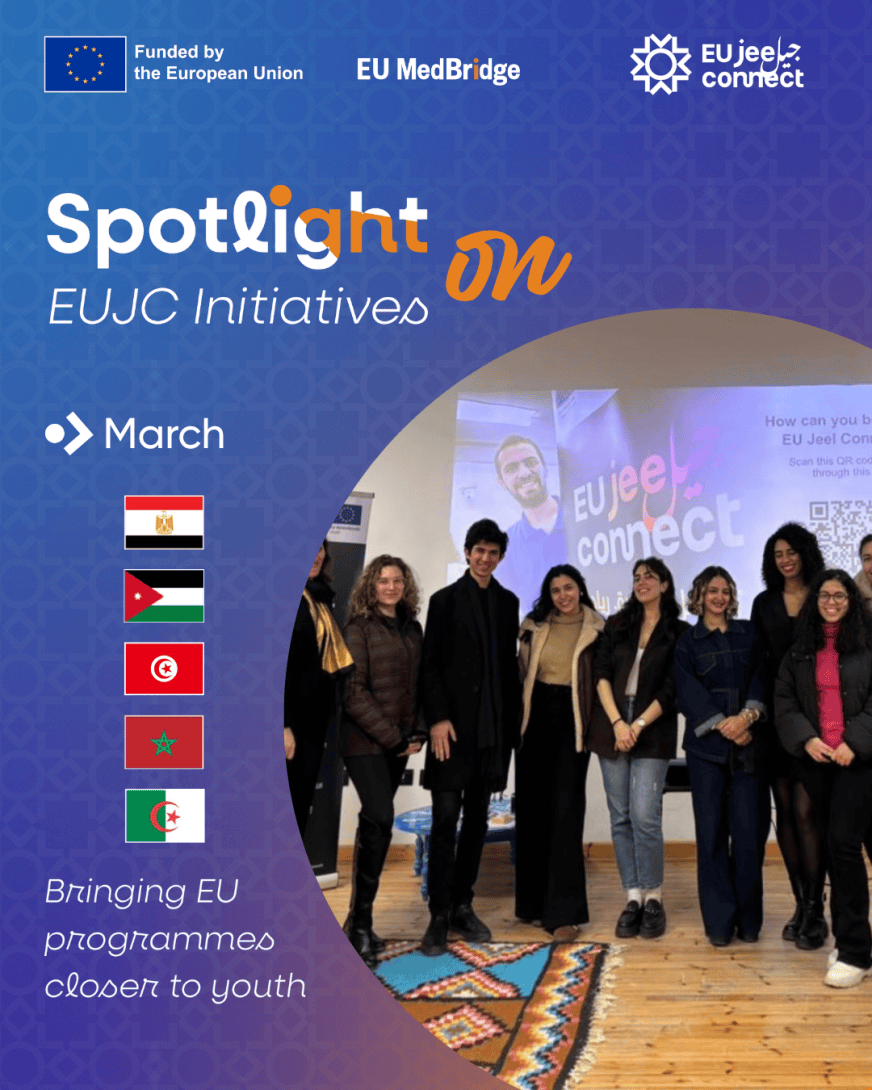
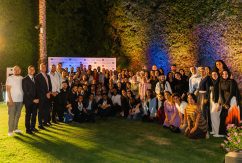
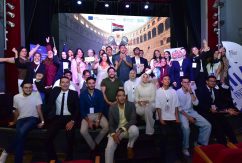
March continued to be a month of momentum for our EU Jeel Connectors, who organised more than a dozen youth-led initiatives across Egypt, Jordan, Tunisia, Morocco, and Algeria — each one bringing EU-funded programmes and opportunities closer to young people. Here’s a closer look at the second wave of activities.
Egypt 🇪🇬
In Zamalek, Connector Farah Essam Badawi organised “Qafela in Universities: Heritage-to-Business,” an educational workshop connecting Egyptian heritage with contemporary design and the creative economy. Through discussions and practical team exercises, participants explored heritage-inspired design and developed their own concepts, while learning about EU-supported opportunities including Erasmus+, Erasmus Mundus, the Euro-Egyptian Cultural Programme (EECP), EUNIC Egypt, and Horizon Europe.
Online, Connector Asaf Nady Rateb hosted “EU Opportunities,” a workshop offering practical guidance on accessing EU-funded education, mobility, and volunteering programmes. Participants explored Erasmus+, Erasmus Mundus, short-term mobility opportunities, the European Solidarity Corps (ESC), and the Europass platform, alongside hands-on sessions on personal branding, motivation letter writing, and application strategies.
Jordan 🇯🇴
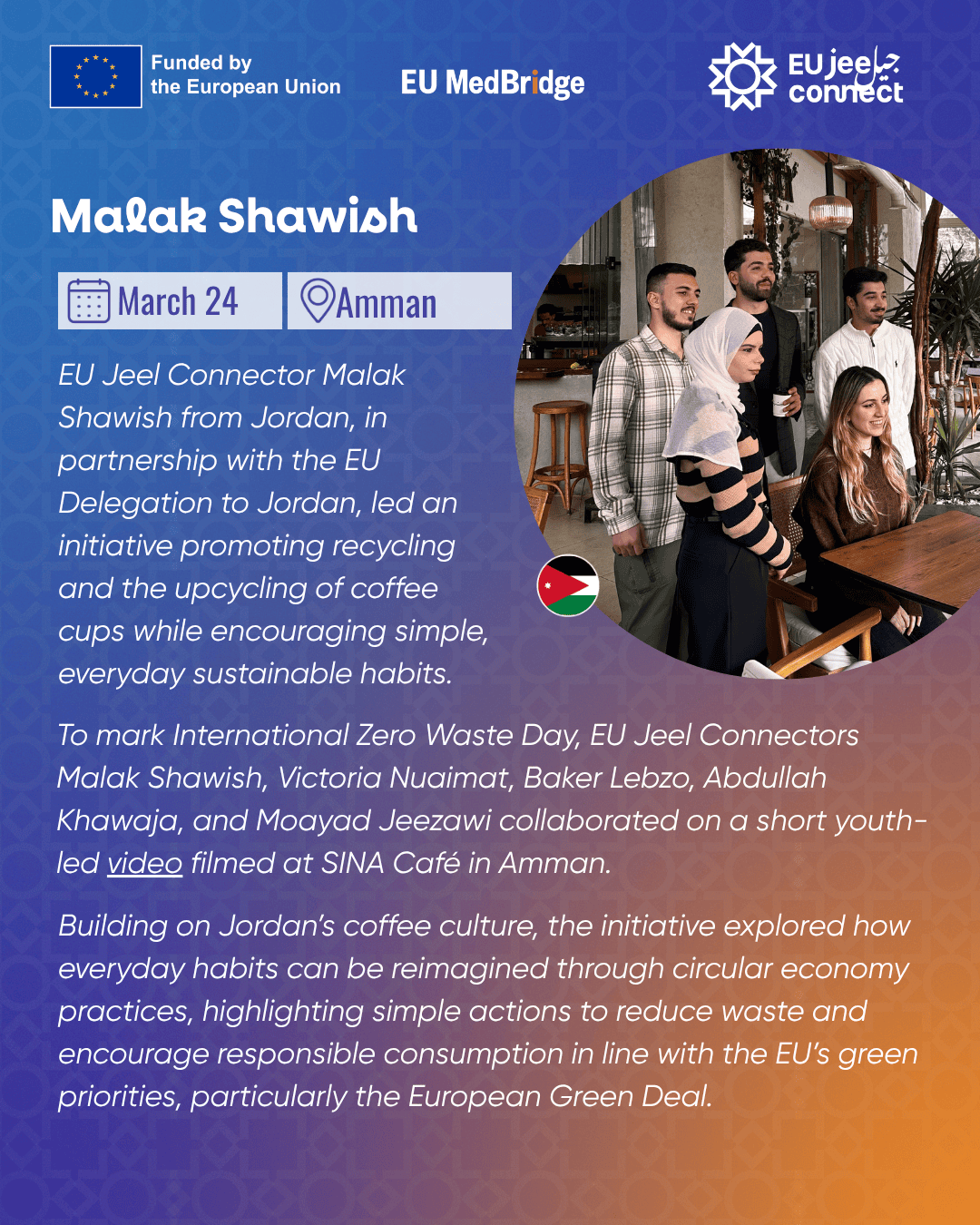
In Amman, Connector Malak Shawish, in partnership with the EU Delegation to Jordan, led an initiative promoting recycling and the upcycling of coffee cups to encourage simple, everyday sustainable habits. To mark International Zero Waste Day, Malak teamed up with fellow Connectors Victoria Nuaimat, Baker Lebzo, Abdullah Khawaja, and Moayad Jeezawi to produce a short youth-led video filmed at SINA Café, building on Jordan’s coffee culture to spotlight circular economy practices in line with the European Green Deal.
Tunisia 🇹🇳
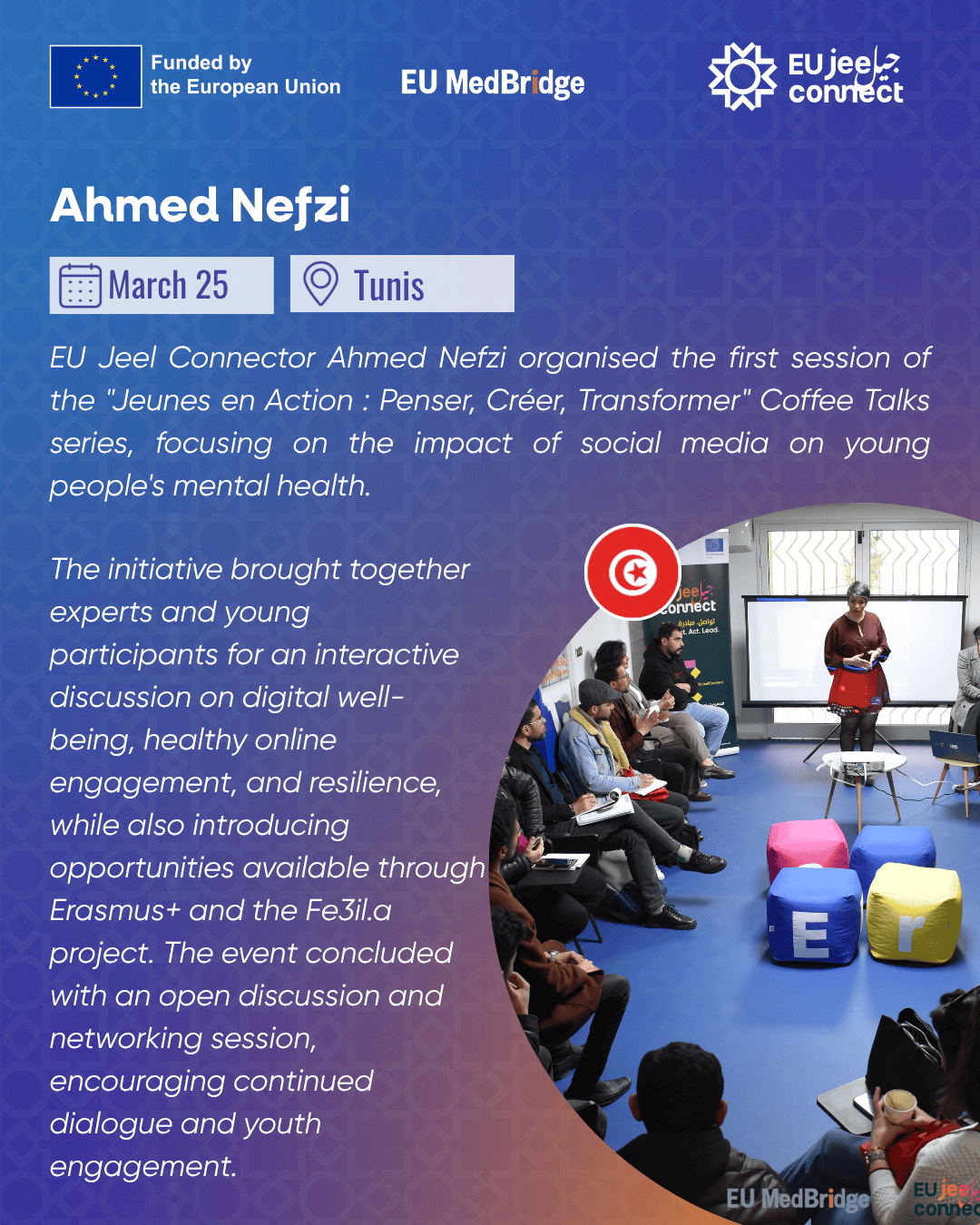
In Tunis, Connector Ahmed Nefzi launched the first session of “Jeunes en Action: Penser, Créer, Transformer,” a Coffee Talks series focusing on the impact of social media on young people’s mental health. The session brought together experts and youth for an interactive discussion on digital well-being, healthy online engagement, and resilience, while introducing opportunities through Erasmus+ and the Fe3il.a project.
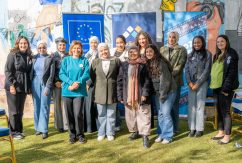
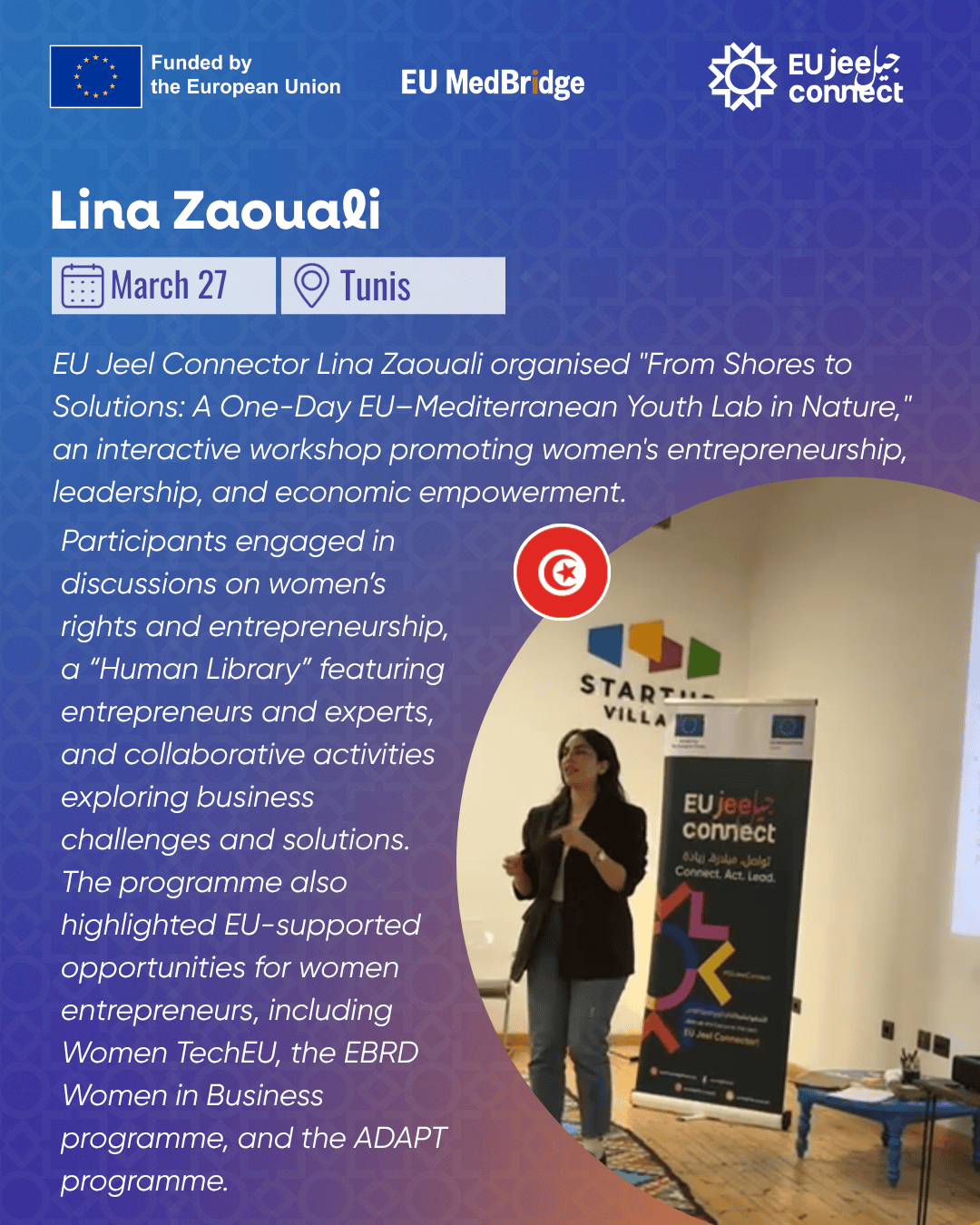
Also in Tunis, Connector Lina Zaouali organised “From Shores to Solutions: A One-Day EU–Mediterranean Youth Lab in Nature,” promoting women’s entrepreneurship, leadership, and economic empowerment. The programme featured discussions on women’s rights and entrepreneurship, a “Human Library” with entrepreneurs and experts, and collaborative activities exploring business challenges — while highlighting opportunities like Women TechEU, the EBRD Women in Business programme, and ADAPT.
Morocco 🇲🇦
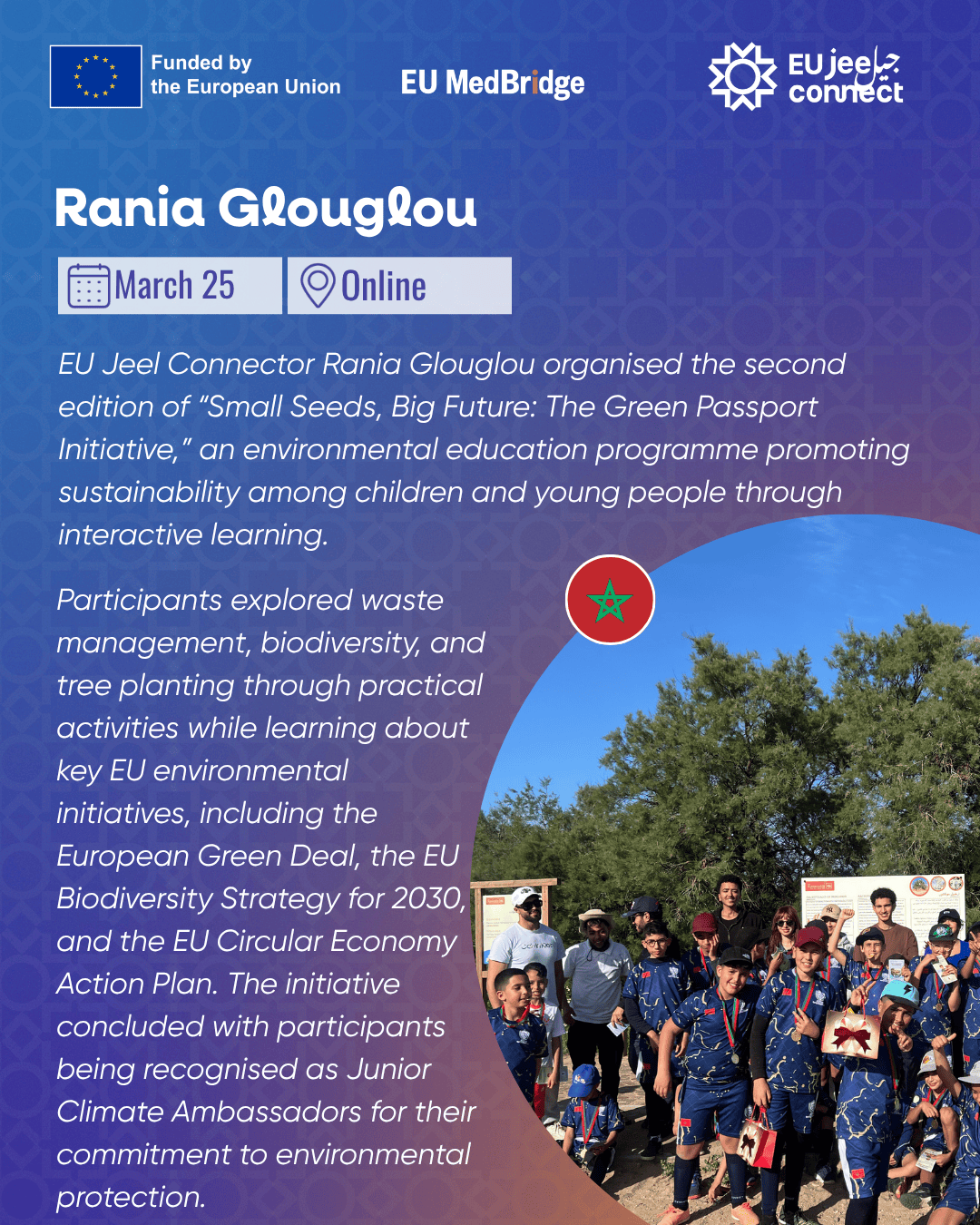
Online, Connector Rania Glouglou ran the second edition of “Small Seeds, Big Future: The Green Passport Initiative,” an environmental education programme promoting sustainability among children and young people. Participants explored waste management, biodiversity, and tree planting through hands-on activities, learning about the European Green Deal, the EU Biodiversity Strategy for 2030, and the EU Circular Economy Action Plan — concluding with participants recognised as Junior Climate Ambassadors.
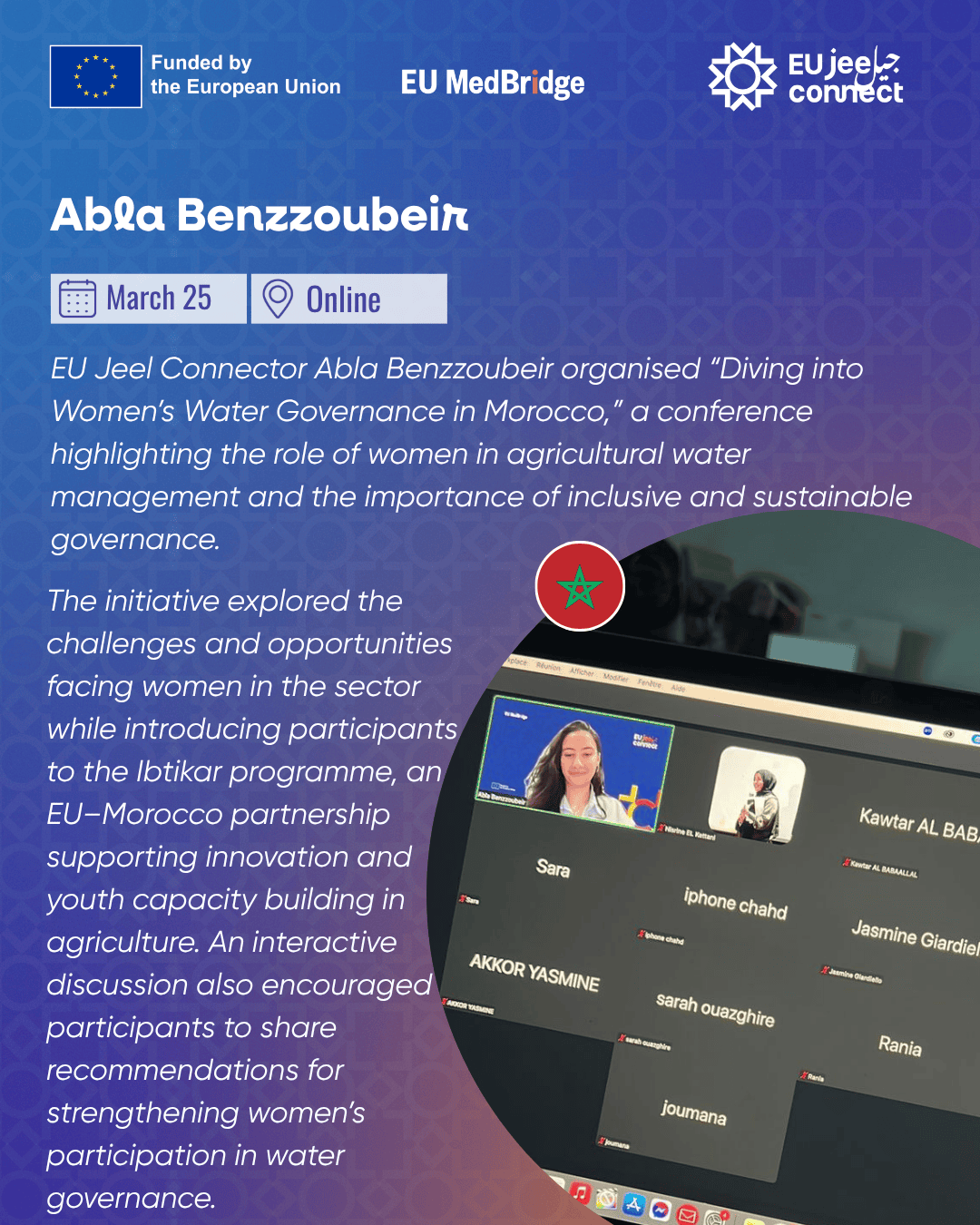
Also online, Connector Abla Benzzoubeir organised “Diving into Women’s Water Governance in Morocco,” a conference highlighting the role of women in agricultural water management and inclusive, sustainable governance. The session explored sector challenges and opportunities while introducing the Ibtikar programme, an EU–Morocco partnership supporting innovation and youth capacity building in agriculture.
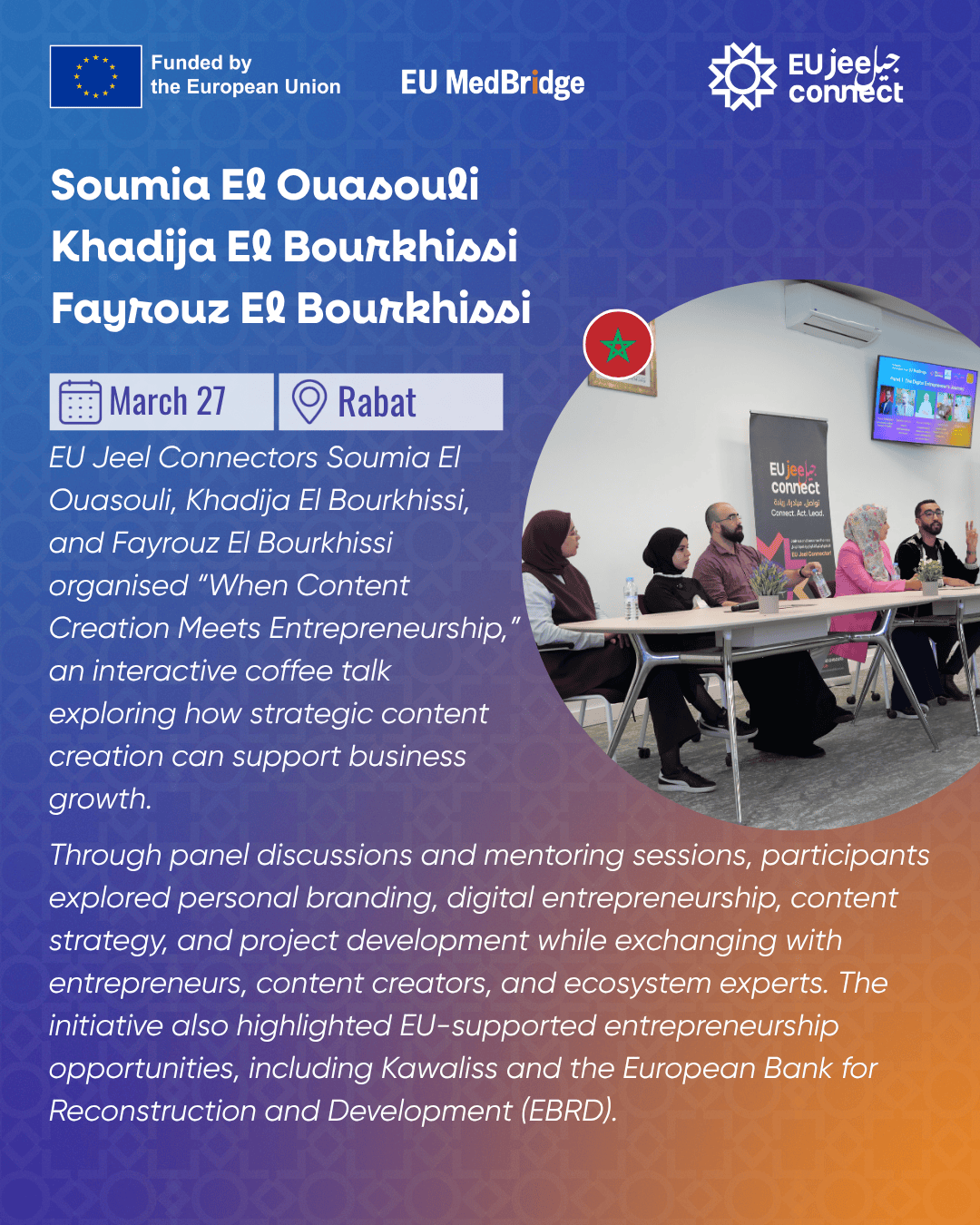
In Rabat, Connectors Soumia El Ouasouli, Khadija El Bourkhissi, and Fayrouz El Bourkhissi brought together entrepreneurs, content creators, and ecosystem experts for “When Content Creation Meets Entrepreneurship,” an interactive coffee talk exploring personal branding, digital entrepreneurship, and content strategy — while spotlighting EU-supported opportunities like Kawaliss and the EBRD.
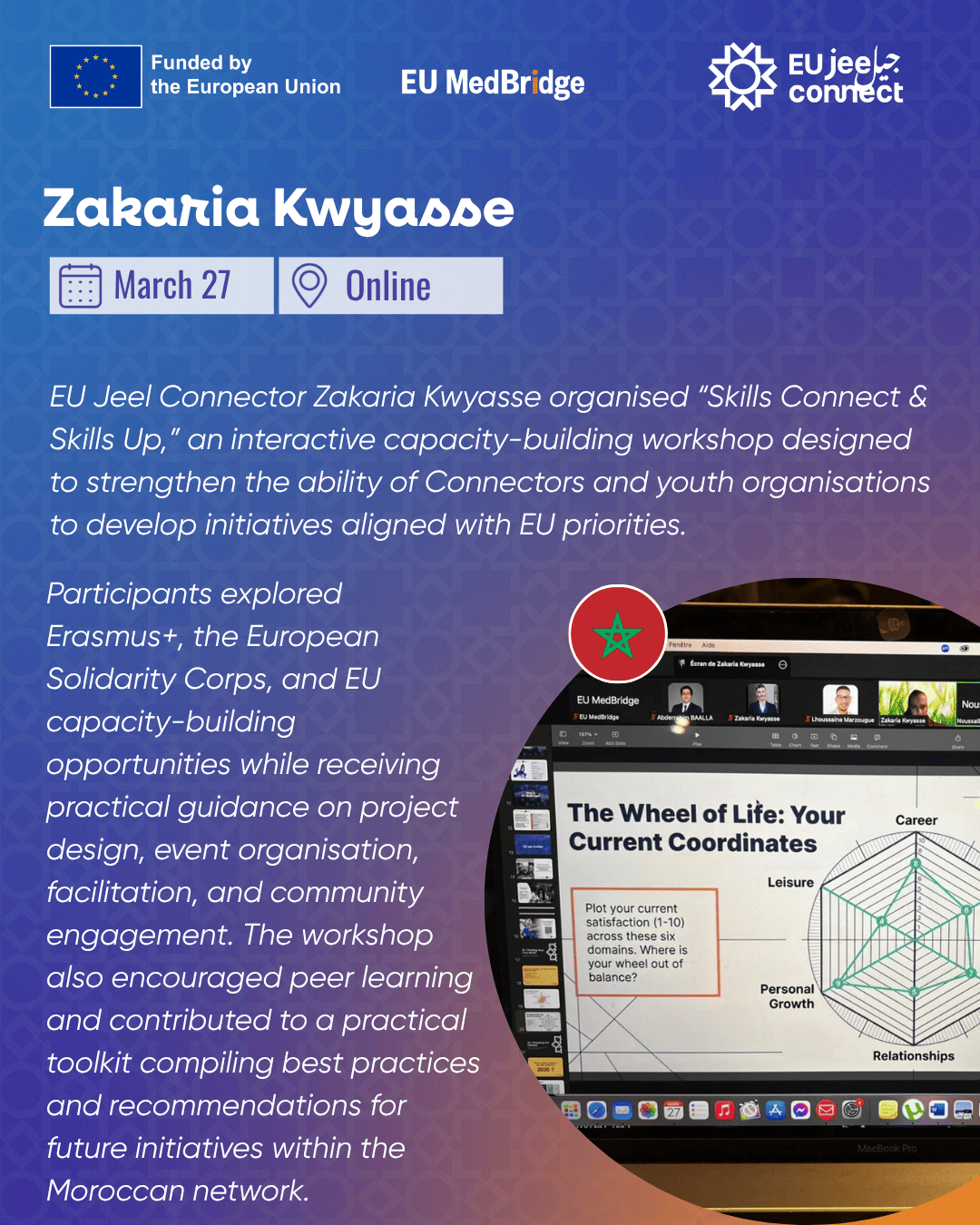
Online, Connector Zakaria Kwyasse led “Skills Connect & Skills Up,” a capacity-building workshop for Connectors and youth organisations, covering Erasmus+, the European Solidarity Corps, and practical guidance on project design, event organisation, facilitation, and community engagement — contributing to a toolkit of best practices for the Moroccan network.
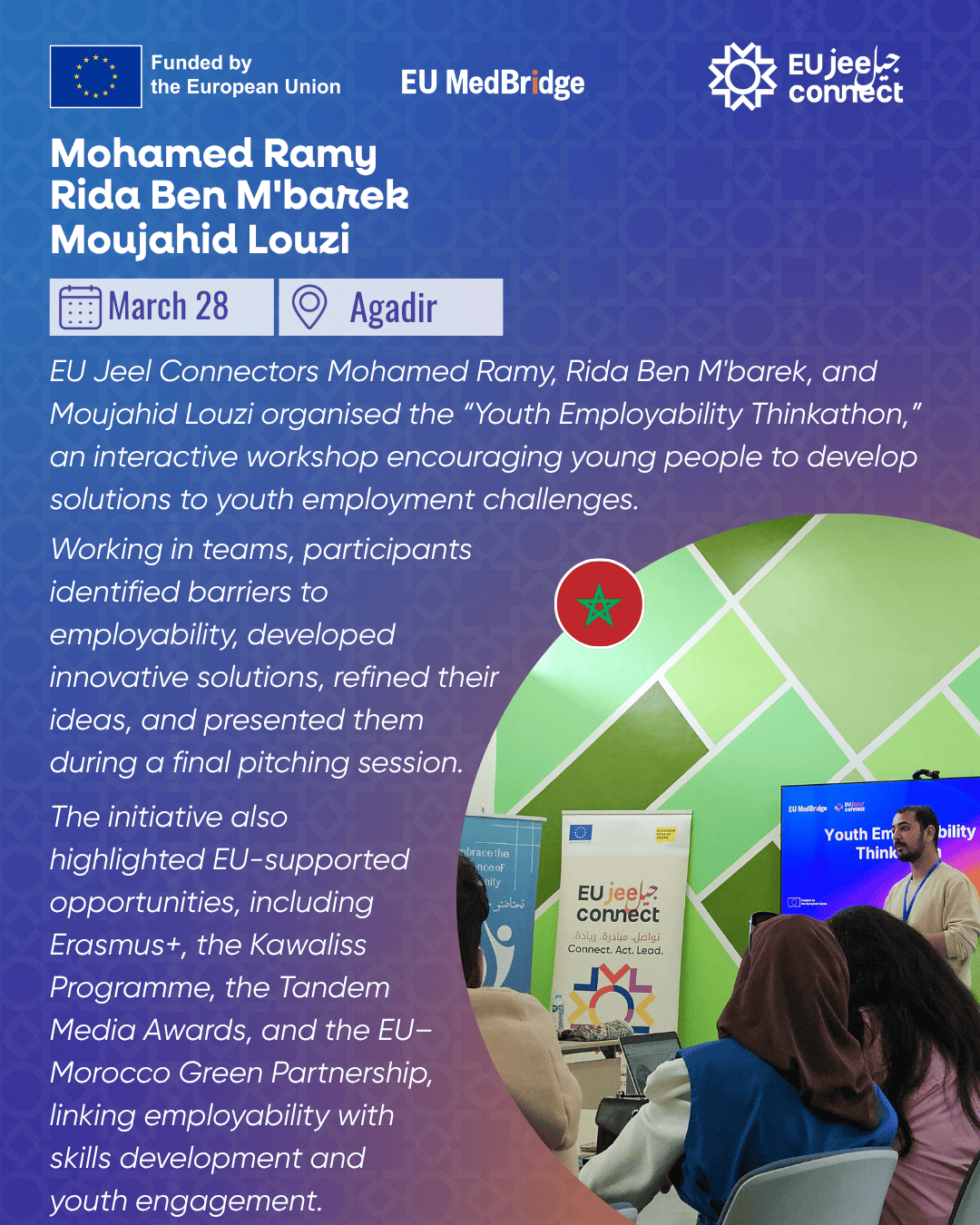
In Agadir, Connectors Mohamed Ramy, Rida Ben M’barek, and Moujahid Louzi organised the “Youth Employability Thinkathon,” where teams identified barriers to employability and pitched innovative solutions — while highlighting Erasmus+, the Kawaliss Programme, the Tandem Media Awards, and the EU–Morocco Green Partnership.
Algeria 🇩🇿
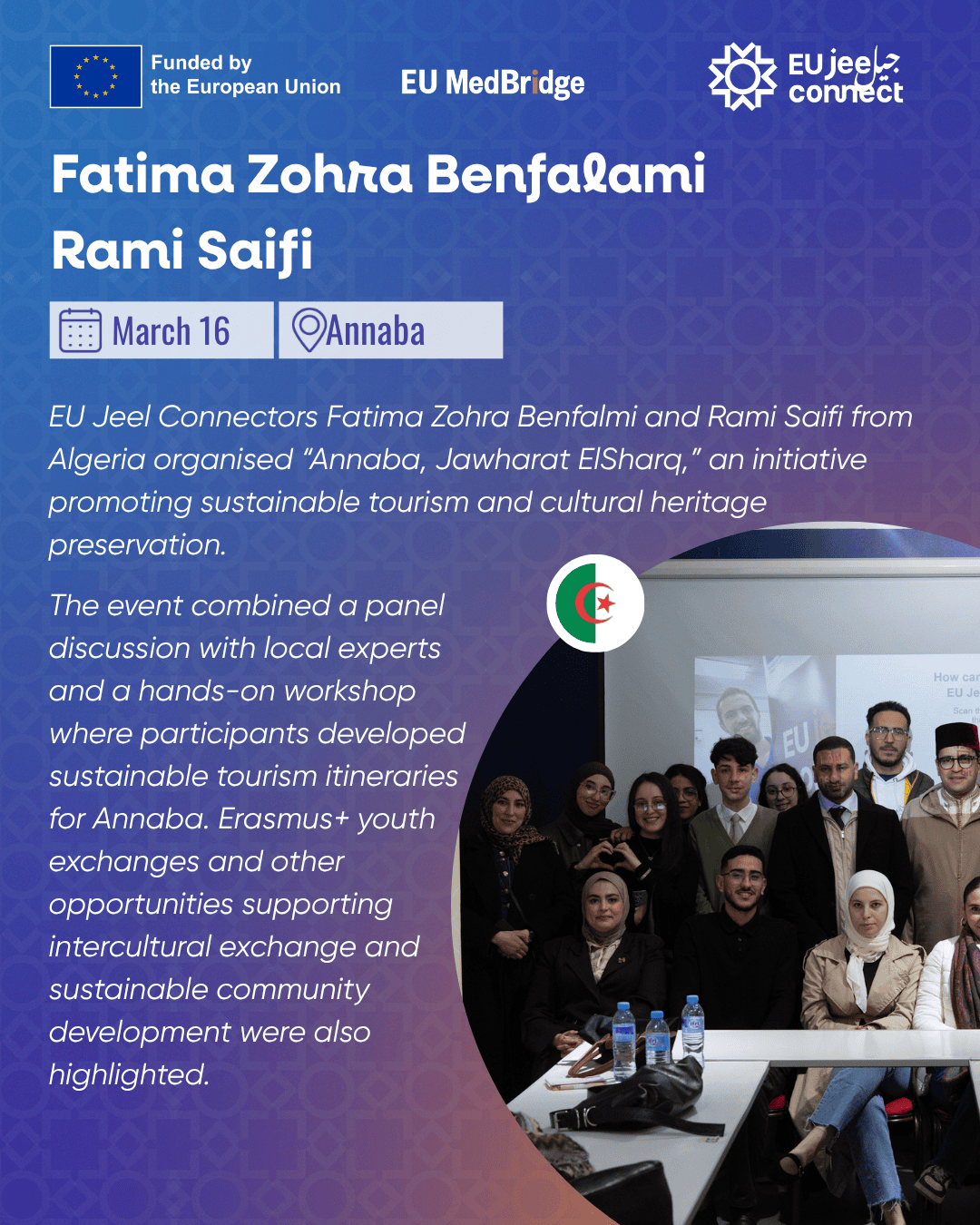
In Annaba, Connectors Fatima Zohra Benfalmi and Rami Saifi organised “Annaba, Jawharat ElSharq,” promoting sustainable tourism and cultural heritage preservation. The event combined a panel discussion with local experts and a hands-on workshop where participants developed sustainable tourism itineraries, with a spotlight on Erasmus+ youth exchanges and other opportunities supporting intercultural exchange.
From heritage and sustainability to entrepreneurship and employability, March’s second wave of EU Jeel Connect activities shows just how far youth-led initiatives can go — one city, one workshop, one connector at a time.
Countries covered:
-
 Algeria
-
Egypt
-
Jordan
-
Morocco
-
Tunisia