


 Algeria
  Bahrain
  Egypt
Egypt  Iran
Iran  Iraq
Iraq  Israel
  Jordan
  Kuwait
  Lebanon
  Libya
Libya  Morocco
  Oman
Oman  Palestine *
  Qatar
Qatar  Saudi Arabia
  Syria
Syria  Tunisia
  United Arab Emirates
  Yemen
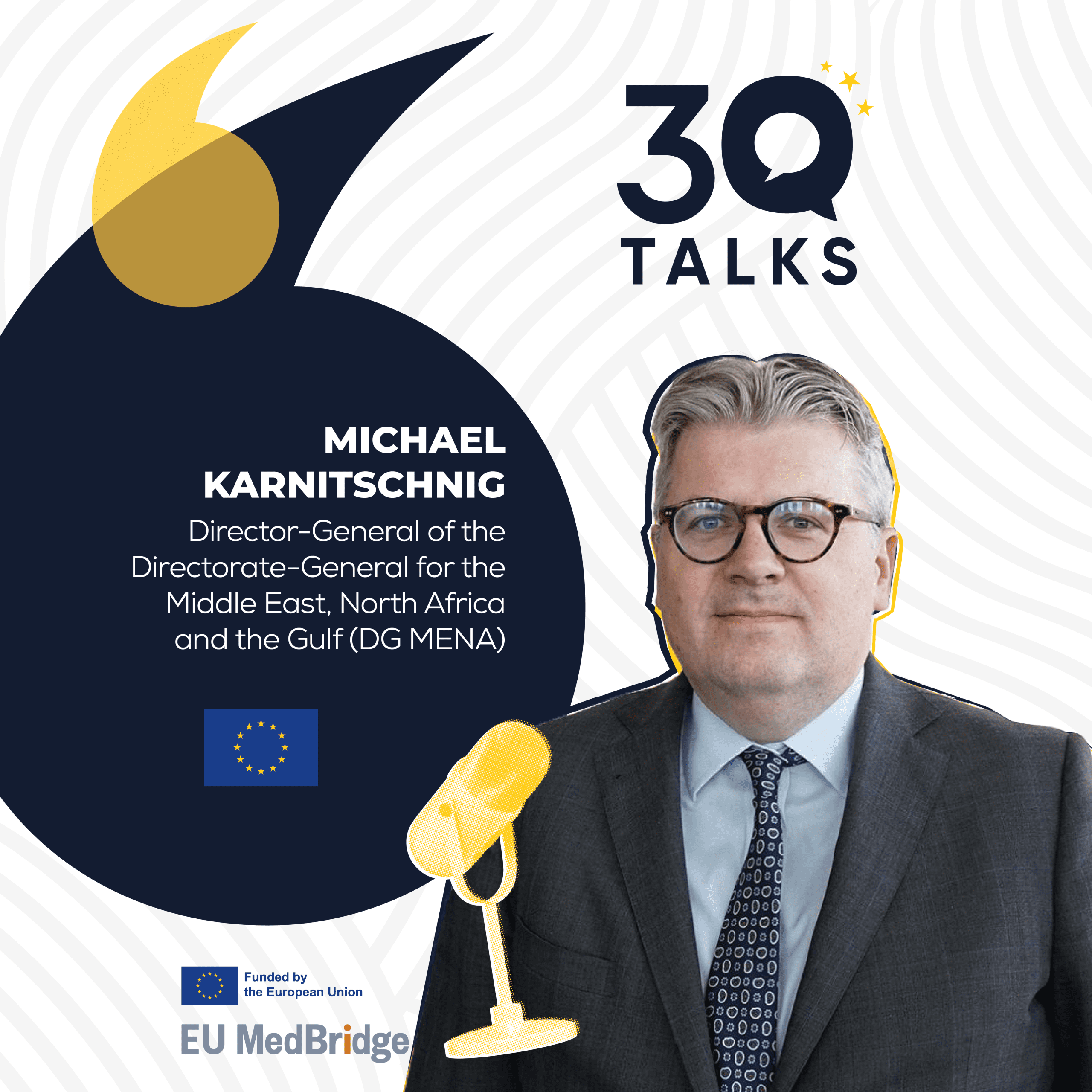
Yemen 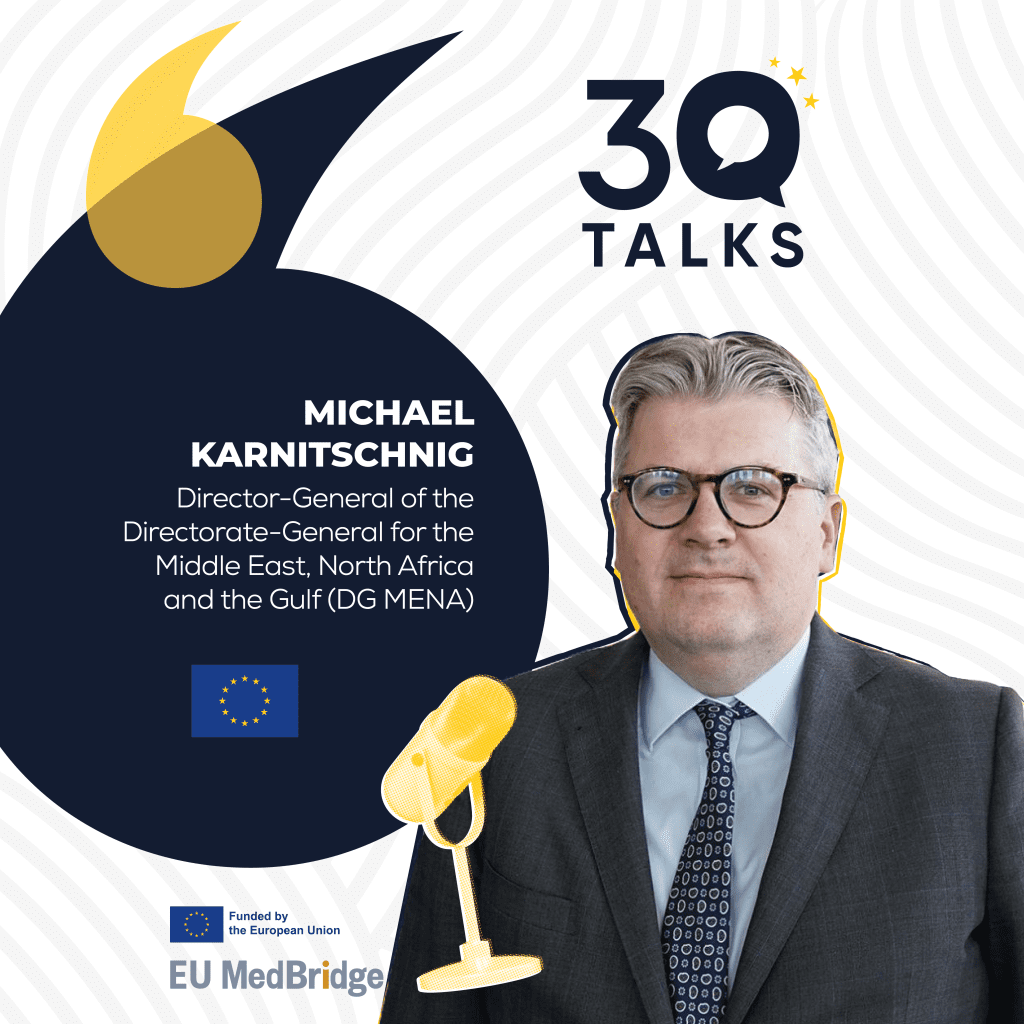 In this edition of 3Q Talks, Michael Karnitschnig, Director-General of the Directorate-General for the Middle East, North Africa and the Gulf (DG MENA), discusses the European Union’s vision for stronger cooperation across the Mediterranean, the opportunities the Pact for the Mediterranean aims to create, and why investing in young people is key to the region’s future.
Why was it important for the European Union to establish DG MENA, and what role does the Pact for the Mediterranean aim to play in the region?
DG MENA is more than an administrative structure or a dedicated portfolio within the European Union. It reflects a simple reality: Europe and the countries of the Mediterranean, the Middle East, and the Gulf are deeply interconnected. We share history, culture, and geography, but we also share challenges that do not stop at borders or coastlines. Whether it is economic development, migration, climate, security, or opportunities for young people, these are issues we can address more effectively together. The Pact for the Mediterranean was created with this spirit in mind. What makes it different from previous approaches is that it was built through a genuine co-creation process with our partners. We did not only consult governments or traditional institutions, but also civil society, youth, activists, the social sector, and business representatives from both shores of the Mediterranean. The Pact is designed to be practical and action-oriented, bringing together more than one hundred initiatives covering areas such as university cooperation, trade, security, migration, investment, and social development. The objective is not to replace what has already been achieved over the years, but to build on it in a more inclusive and forward-looking way.
Young people are increasingly at the centre of discussions around the future of the region. How does the Pact for the Mediterranean address their aspirations and opportunities?
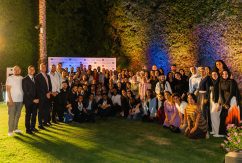
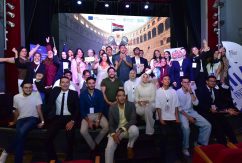
From the beginning, the Pact for the Mediterranean was designed with people at its core. That is why issues related to youth, education, employment, mobility, and opportunity are central to its vision. We are working on initiatives linked to circular migration, opening labour markets and education systems, strengthening vocational training, and encouraging greater European investment across the southern Mediterranean. At the same time, we believe that stronger partnerships are not only built through institutions, but also through human connections. This is why we want to expand exchanges between businesses, strengthen cultural cooperation, and create more opportunities for societal and educational engagement between both shores of the Mediterranean. What stands out most when engaging with young people across the region is their energy, ambition, and openness. Their hopes for the future are not very different from those of young people in Europe. They want stability, opportunity, dignity, and the ability to shape their own future. Ultimately, it is this generation that will define the long-term future of the region, which is why youth play such an important role across our cooperation programmes.
Looking back, what advice would you give to your 20-year-old self, and what message would you share with young people today?
When I was 20, I already knew that I wanted to work for the European Union. Austria had just joined the EU at the time, and there was a strong sense that things were moving forward and that cooperation could create real change in people’s lives, from freedom of movement and studying abroad to broader opportunities and connections. I was always drawn to international affairs and to the idea that countries achieve more when they work together rather than isolate themselves behind borders. Coming from a family with both Austrian and Dutch roots, I grew up believing that openness, cooperation, and international exchange make societies stronger. So the advice I would share with young people today is to stay curious and outward-looking. Do not limit yourself to narrow perspectives or predefined paths. The world is deeply interconnected, and some of the most meaningful progress happens when people collaborate across cultures, ideas, and borders.