









 Algeria
  Bahrain
  Egypt
Egypt  Iran
Iran  Iraq
Iraq  Israel
  Jordan
  Kuwait
  Lebanon
  Libya
Libya  Morocco
  Oman
Oman  Palestine *
  Qatar
Qatar  Saudi Arabia
  Syria
Syria  Tunisia
  United Arab Emirates
  Yemen
Yemen Press Freedom in Syria: Between Hope and Fragile Progress


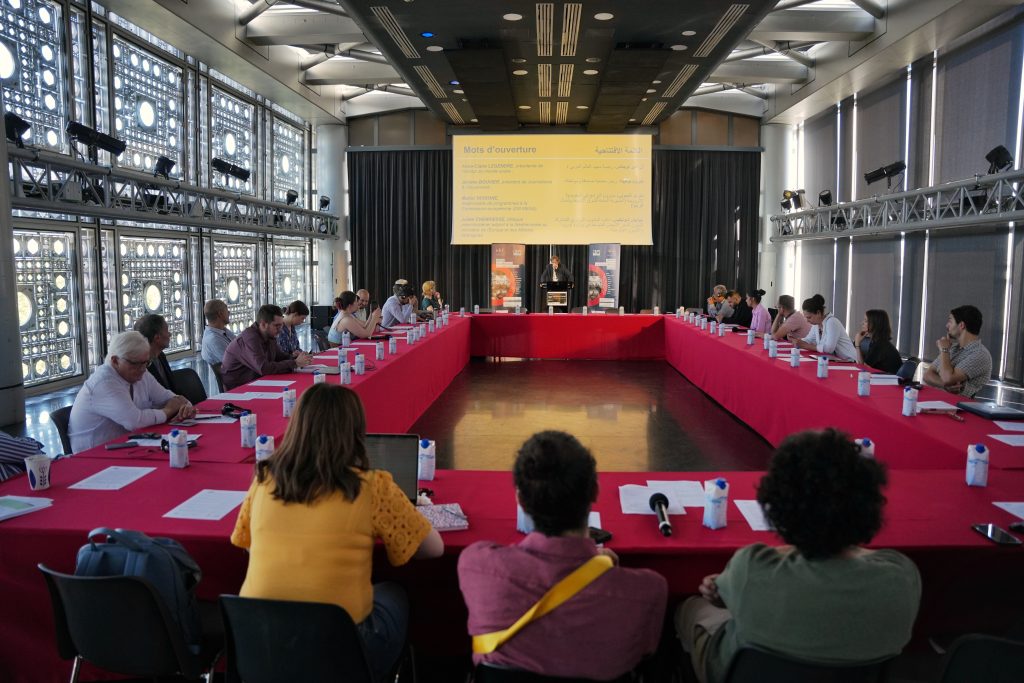
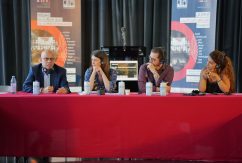
According to the speakers, the fall of the regime has opened up an unprecedented space for free expression, even if it remains fragile. “The situation is transitional. Nothing is perfect, but there is progress,” explained Mahmoud Abo Rass, a Syrian journalist and representative of the Syrian Journalists’ Union. He also stressed that it was once unthinkable to see a programme openly criticising the regime or the political situation on Syrian public media. “Today, this is a reality. And it is something valuable,” he insisted.
Challenges…
For several participants, this opening remains recent and still unstable. “We have no history or real experience of press freedom, or even of practising independent journalism at all,” recalled Syrian journalist Yara Badr. This statement highlights the scale of the challenge facing media professionals in Syria after decades of control, censorship, and repression.
Despite the progress observed, obstacles remain numerous. Discussions notably focused on the absence of genuine regulation of the media sector, as well as outdated and restrictive laws, along with the continued enforcement of cybercrime legislation that has not been reformed since the fall of the regime. According to several speakers, these legal frameworks continue to enable abuse, restrictions, and various forms of prohibition.
Participants also denounced heavy administrative procedures and the difficulties faced by civil society organisations, which still struggle to obtain authorisations or meaningful support. The rise of hate speech, sometimes even encouraged in certain public or digital spaces, was also identified as a major threat to social cohesion and media pluralism.
The situation of Syrian women journalists also took a modest but important place in the discussions. While several training and empowerment programmes now exist, it was highlighted that there are still very few real opportunities for women to access positions of power and decision-making within Syrian media. “Today, an essential question arises: how can we guarantee genuine press freedom in Syria when a key actor remains largely absent from the media landscape, namely Syrian women journalists? And this is not only about their presence in newsrooms or in journalistic production, but also about their access to spaces of power and decision-making. Because how can we hope to build truly inclusive and gender-sensitive policies when those most concerned remain absent from discussions and decision-making bodies?” asked Loujain Haj Youssef, executive director of Radio Rozana in Syria.
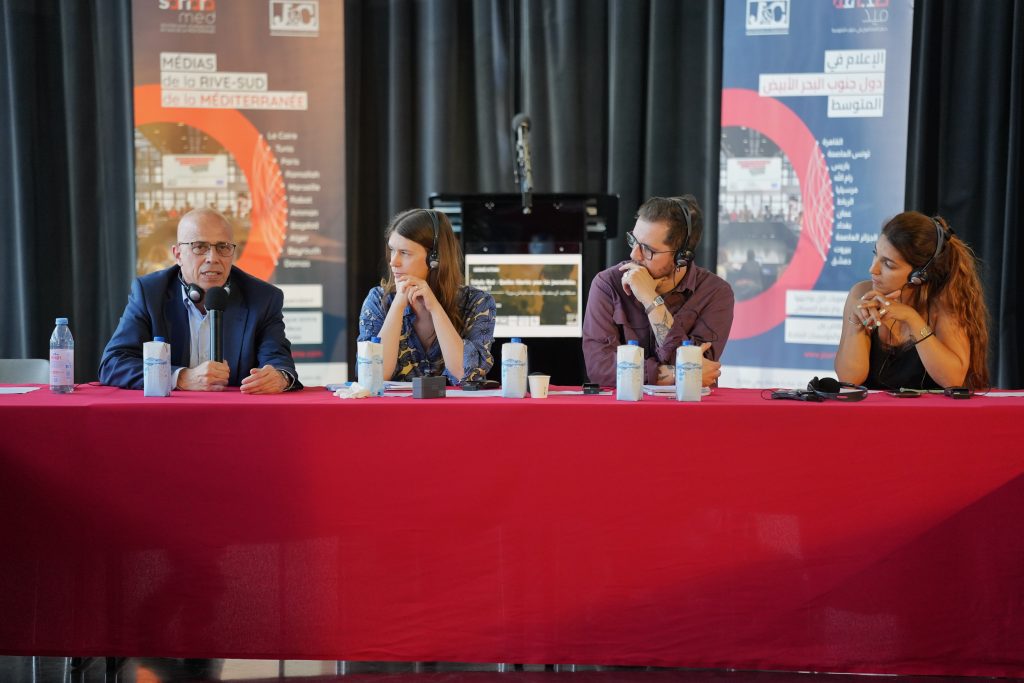
Today, Syria appears to be at a true turning point. Will the country genuinely move forward on the path of freedom of expression and press freedom, and more importantly, will it be able to sustain this momentum over the long term? Many Syrian journalists continue to believe in this possibility, despite the obstacles and uncertainties. What remains essential is unity and solidarity in order to build a credible, pluralistic, and independent media landscape.
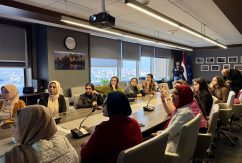
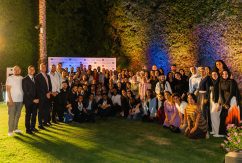
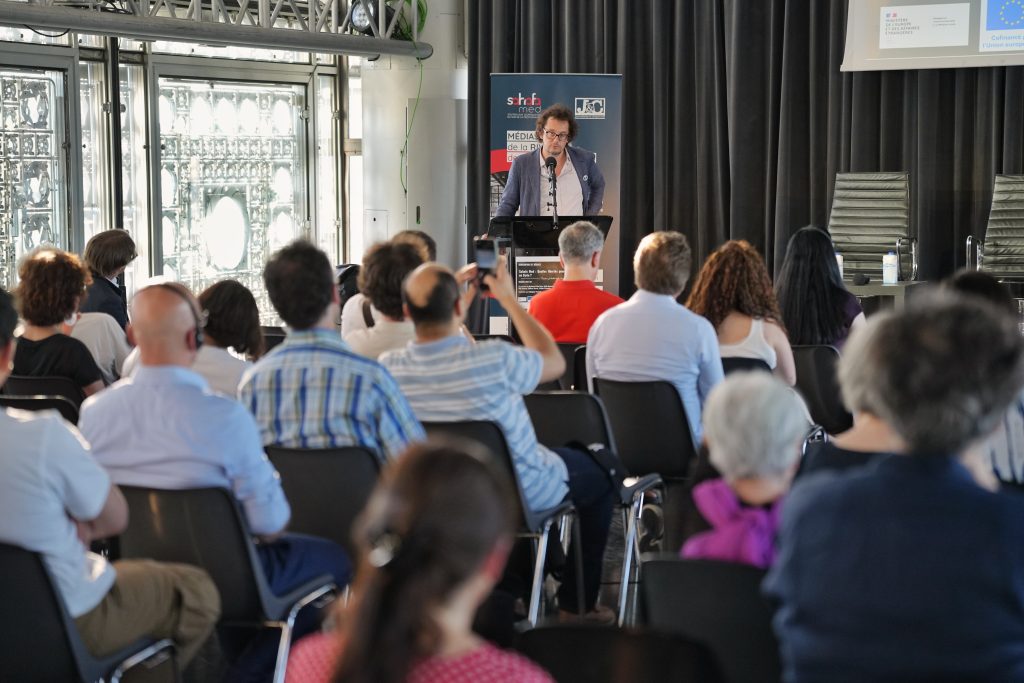
In this context, gatherings such as the one held at the Institut du Monde Arabe (IMA) prove essential. They create space for constructive and healthy exchanges of different perspectives, allowing Syrian journalists from diverse backgrounds to share their experiences, concerns, and hopes for the future. As Marco Tassone, Programme Manager at the European Commission, reminded participants during the event, supporting independent Syrian media remains crucial to countering disinformation, strengthening public debate, and accompanying the country’s democratic reconstruction.
*Photo Credit goes to Zaher Elzaher and Zakaria Abed Kafi