





















 Algeria
  Bahrain
  Egypt
Egypt  Iran
Iran  Iraq
Iraq  Israel
  Jordan
  Kuwait
  Lebanon
  Libya
Libya  Morocco
  Oman
Oman  Palestine *
  Qatar
Qatar  Saudi Arabia
  Syria
Syria  Tunisia
  United Arab Emirates
  Yemen
Yemen WISEMED engages farmers in Tunisia to Drive Resilient Agriculture in the Mediterranean


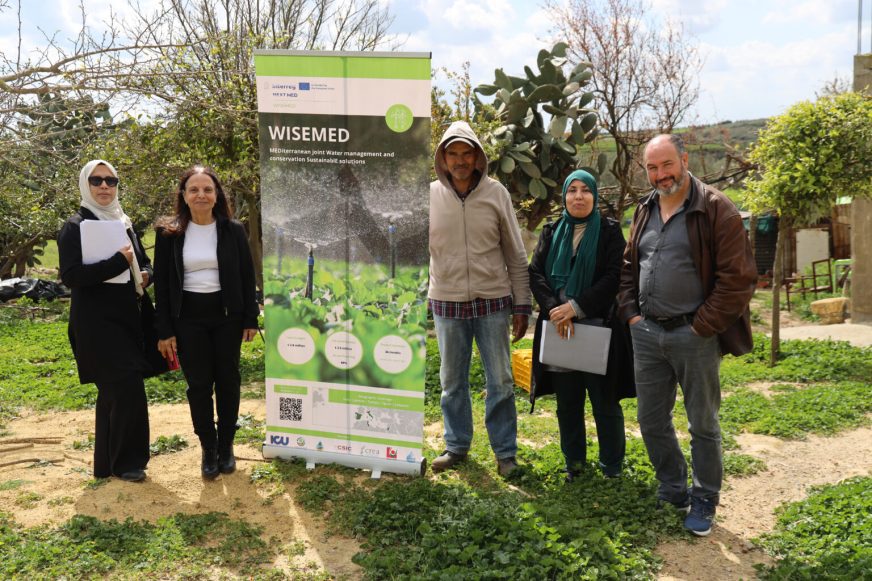
As part of the activities of the WISEMED project – MEDiterranean joint Water management and conservatIon SustainablE solutions, funded by the European Union under the Interreg NEXT MED Programme and coordinated by the Istituto per la Cooperazione Universitaria (ICU), a series of information and awareness days were organised in March 2026 in the agricultural areas of Lebna and Menzel Temime, located in the Cap Bon region of Tunisia. The initiative, organized by the tunisian partner CERTE (Centre de Recherches et des Technologies des Eaux), aimed to strengthen dialogue with local farmers and better understand the challenges affecting agricultural water management under increasing climate pressure.
Cap Bon is one of Tunisia’s main agricultural hubs, where farming systems rely heavily on irrigation and groundwater resources. However, the region is facing growing water scarcity, overexploitation of aquifers and increasing salinity of both irrigation water and soils, threatening agricultural productivity and long-term sustainability. Through a participatory and field-oriented approach, the WISEMED partners, including CERTE, INGREF (Institut National de Recherches en Génie Rural, Eaux et Forêts) and ICU, conducted field visits, direct interviews and structured surveys involving around 100 farmers. The activity sought to identify the main technical, environmental and socio-economic constraints faced by local agricultural communities, while assessing their interest in innovative and sustainable water management solutions.
The results highlighted a strong dependence on irrigation systems and a widespread perception among farmers that water availability has significantly decreased in recent years. Salinity emerged as one of the most critical issues affecting crops, soil quality and farm profitability. Although drip irrigation systems are widely adopted, their use often remains insufficiently optimised due to limited access to monitoring tools, irrigation planning systems and technical support. Farmers also reported major structural constraints, including high pumping costs linked to diesel use, limited investment capacity, irregular access to collective irrigation networks and insufficient technical assistance. According to the survey, these combined pressures can lead to yield losses ranging from 20% to 40%, with significant socio-economic consequences for rural communities.
Despite these challenges, the initiative revealed a strong willingness among farmers to adopt innovative solutions. Participants expressed particular interest in smart irrigation technologies, humidity and salinity sensors, water blending strategies and crop varieties tolerant to drought and salinity. Many also showed readiness to participate in technical training sessions and pilot actions under the project. The information days represented an important milestone for the WISEMED project, reinforcing collaboration between research institutions and local stakeholders while laying the groundwork for future pilot activities. By promoting participatory approaches and locally adapted innovations, WISEMED contributes to supporting the transition towards more resilient and efficient agricultural systems in the Mediterranean region.
Countries covered:
-
 Tunisia