















 Algeria
  Bahrain
  Egypt
Egypt  Iran
Iran  Iraq
Iraq  Israel
  Jordan
  Kuwait
  Lebanon
  Libya
Libya  Morocco
  Oman
Oman  Palestine *
  Qatar
Qatar  Saudi Arabia
  Syria
Syria  Tunisia
  United Arab Emirates
  Yemen
Yemen 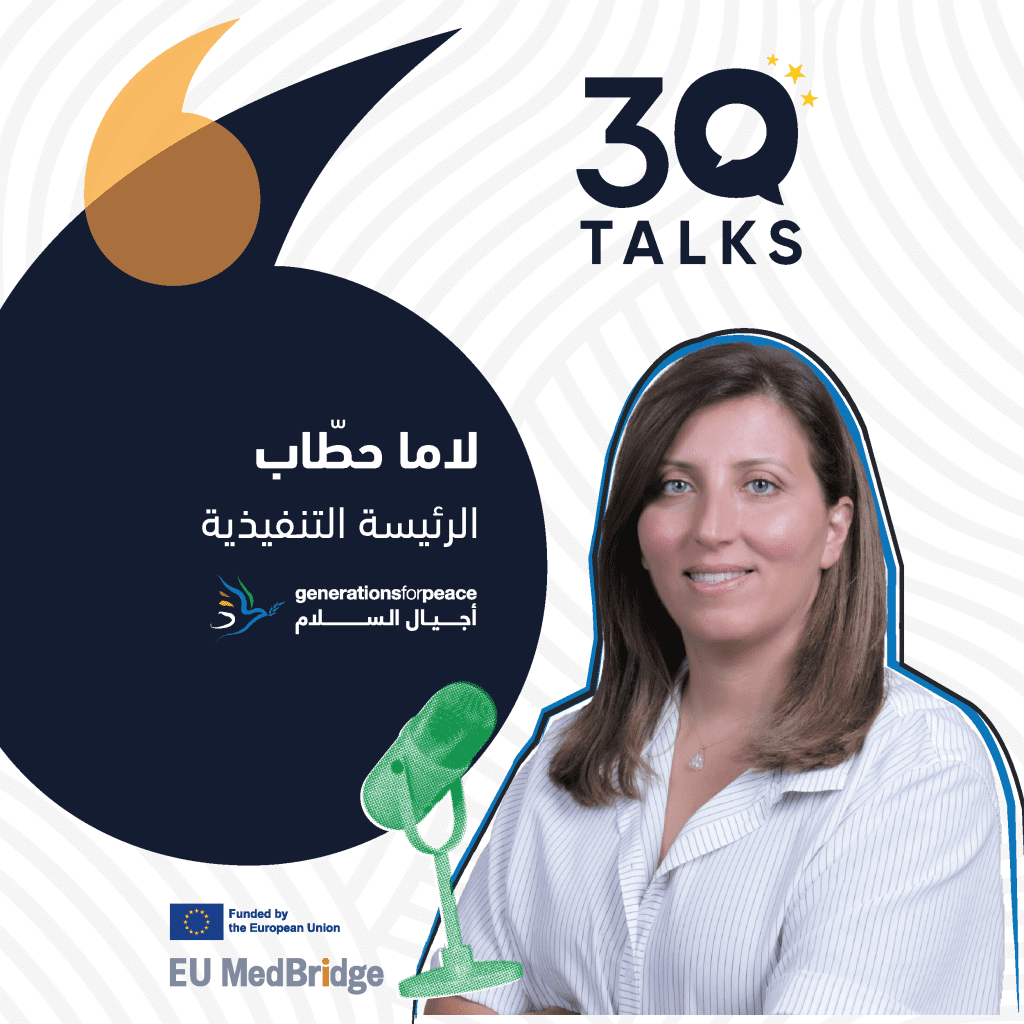 Lama Hattab, Chief Executive Officer of Generations For Peace, shares her perspective on youth, belonging, and the power of meaningful engagement. With over 17 years of experience working across regions affected by conflict and social challenges, Lama brings both strategic insight and lived commitment to advancing social cohesion and opportunity. In this interview, she reflects on the vision behind the Hudour Programme, the importance of creating spaces where young people feel seen and heard, and the lessons she wishes she had known earlier in her own journey.
1. What is the project about, and what impact does it aim to achieve?
Hudour Programme is about ensuring young people in Jordan feel that they belong, are prepared, and have a real role in shaping their future. Many young Jordanians are educated and motivated, yet face unemployment, limited civic participation, and growing stress and uncertainty. Hudour responds by equipping youth with practical skills, confidence, and a sense of agency, so they are not just trained, but truly present in the labour market, in their communities, and in conversations around wellbeing. The project aims to support a generation of young Jordanians who can access work opportunities, lead positive community change, and support one another’s mental well-being, contributing meaningfully to Jordan’s social and economic development.
2. Which activities, initiatives, or opportunities offered by the project should young people know about?
Hudour offers young people practical, real–world opportunities that reflect their lived realities. Youth can access digital skills training through youth centers across Jordan, opening doors to employment, freelancing, and entrepreneurship, especially important for young women and those facing mobility or social barriers. The project also creates civic engagement opportunities, where young people work with municipalities to identify local needs and design solutions together, helping them see that their voices and ideas matter. Hudour also prioritises mental health and psychosocial support through sport and arts, building peer support networks that reduce stigma and help youth manage stress, burnout, and uncertainty. Importantly, Hudour connects young people to mentorship, networks, and decision–making spaces, ensuring their perspectives are heard locally and nationally.
3. What advice do you wish you had received when you were 20?
I wish I had been told that feeling uncertain does not mean you are failing, especially in Jordan, where pressure to succeed is high. At 20, you don’t need all the answers. Growth is not linear, and building skills, trying new paths, and even making mistakes are part of becoming ready. Most importantly, I wish I had known that your presence matters, showing up, engaging, and believing you can contribute is often the first step toward creating opportunities for yourself and for your community. That is the message Hudour seeks to pass on to today’s young people in Jordan.