

























 Algeria
  Bahrain
  Egypt
Egypt  Iran
Iran  Iraq
Iraq  Israel
  Jordan
  Kuwait
  Lebanon
  Libya
Libya  Morocco
  Oman
Oman  Palestine *
  Qatar
Qatar  Saudi Arabia
  Syria
Syria  Tunisia
  United Arab Emirates
  Yemen
Yemen DIEM Workshop in Jordan highlights key challenges and opportunities for Cultural Heritage education


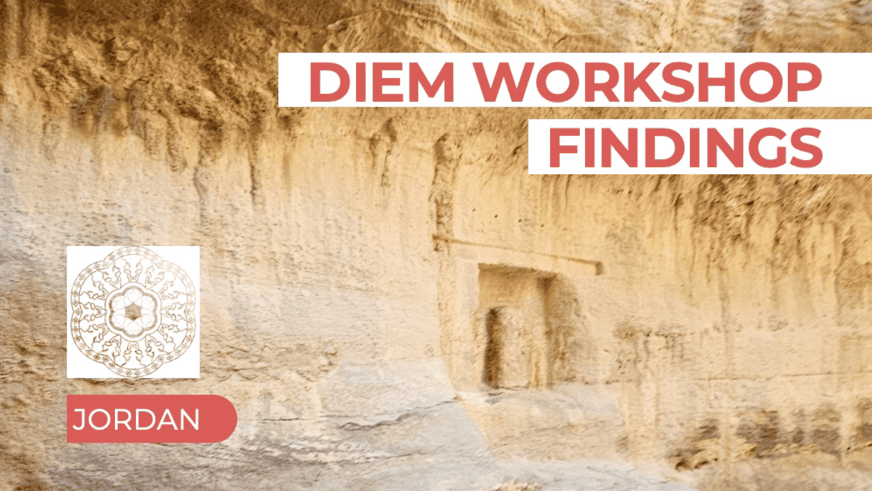
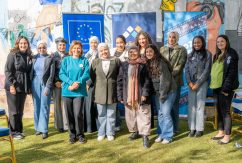
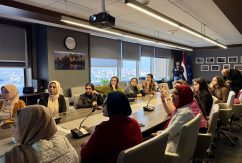
The first national workshop organised by the DIEM project in Jordan marked an important step towards understanding how education and training can better support the cultural heritage sector. Bringing together representatives from universities, public institutions, research centres, NGOs and the private sector, the workshop created a space for dialogue on one of the project’s core objectives: identifying the skills and competencies needed to prepare the next generation of heritage professionals. The discussion also provided valuable evidence that will contribute to the design of DIEM’s future learning activities and pilot actions across the Mediterranean.
As part of the workshop, participants explored the current state of cultural heritage education in Jordan. The analysis identified around 50 educational programmes related to the heritage sector, offered by different universities and institutions. While this demonstrates a growing interest in heritage education, participants observed that programmes are often distributed across disciplines such as archaeology, architecture, conservation, tourism and cultural heritage management, rather than being integrated into comprehensive learning pathways.
The workshop also highlighted that most programmes remain strongly academic in nature. According to the analysis, 94% of identified programmes are academic, while only 6% provide professional or technical training. In addition, 61% of programmes are offered at Bachelor’s level, compared to just 9% at technician or diploma level.
One of the central themes emerging from the discussion was the gap between academic education and the practical skills required in the heritage sector. Participants recognised that graduates often possess solid theoretical knowledge but have limited opportunities to gain practical experience through fieldwork, conservation projects or interdisciplinary collaboration. The workshop therefore highlighted the importance of strengthening vocational pathways, extending practical training opportunities and creating stronger connections between universities, heritage institutions and employers.
Another recurring topic was the growing demand for new technical competencies. Stakeholders identified skills such as GIS applications, photogrammetry, digital documentation, heritage site management and community engagementas increasingly important for professionals working in cultural heritage, while noting that these areas are still underrepresented in many educational programmes.
Beyond curriculum development, the workshop stressed the importance of collaboration. Participants highlighted the need to reinforce partnerships between universities, training centres, public authorities and cultural heritage institutions in order to facilitate internships, field-based learning and more effective transitions from education to employment. Multidisciplinary collaboration between architects, archaeologists, engineers and technicians was also recognised as a key factor in addressing the complex challenges of heritage conservation and management.
Countries covered:
-
 Jordan