





















 Algeria
  Bahrain
  Egypt
Egypt  Iran
Iran  Iraq
Iraq  Israel
  Jordan
  Kuwait
  Lebanon
  Libya
Libya  Morocco
  Oman
Oman  Palestine *
  Qatar
Qatar  Saudi Arabia
  Syria
Syria  Tunisia
  United Arab Emirates
  Yemen
Yemen Four days in Turin: building a shared future for Palestine’s TVET teachers


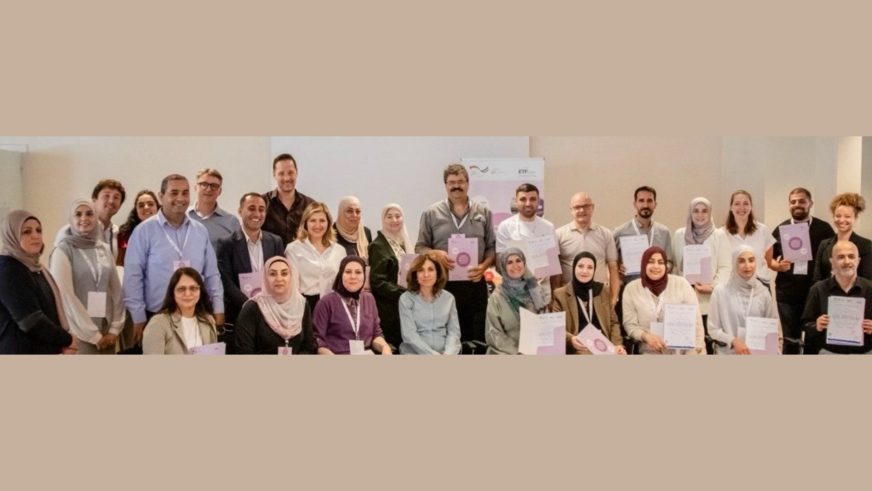
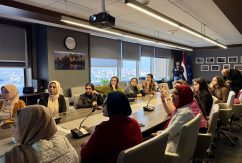
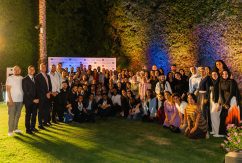
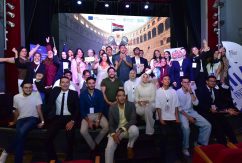
From 21 to 24 June 2026, that started to change. In Turin, Italy, representatives of Palestine’s Ministry of Education and Higher Education, Ministry of Labour, National Institute for Educational Training (NIET), the Accreditation and Quality Assurance Commission (AQAC), UNRWA and UNESCO sat down with the European Training Foundation (ETF) and the International Training Centre of the ILO (ITCILO), convened by GIZ Palestine, to do something rarely attempted in a single workshop: design the outline of a national system, not just discuss its problems.
Palestine’s TVET teachers currently develop their careers along two very different tracks. Teachers in Ministry of Education-affiliated vocational schools are increasingly supported through a structured professional diploma pathway delivered by NIET. Trainers linked to the Ministry of Labour, and instructors in technical colleges, depend far more on ad hoc, project-based training, often disconnected from any shared competence framework or recognised qualification. UNRWA, meanwhile, runs its own separate model for its own institutions.
The most striking outcome of the Turin dialogue is how much four separate groups agreed on, without being told to. Working through seven “Concept Design Labs,” four parallel groups, each representing a different institutional perspective, independently produced vision statements, competence frameworks and governance proposals for a future TVET teaching workforce.
Despite using different words, all four visions converged on the same underlying priorities: teacher empowerment, quality, innovation and a stronger link between training and employment. All four groups also converged on the same five competence domains:
- pedagogical skill,
- technical updating,
- digital and AI-enabled teaching,
- green skills,
- inclusive teaching
They also agreed on the same institutional roles: the National TVET Commission for policy oversight, NIET for delivery, and AQAC for accreditation.
Rather than sketching an abstract ladder, participants designed the pathway around four real career stages, each represented by a named persona. Layla, an entry-level teacher, needs support with classroom management and induction. Omar, mid-career, needs modular learning and mentoring linked to stackable micro-credentials. Rana, a specialist, needs recognised pathways that connect to higher education and industry. Tariq, a senior leader, needs coaching, strategic planning and quality-assurance skills.
A concrete reference discussed in Turin came from UNRWA, whose Professional Development Programme has already moved from a single exam-based qualification to a modular, competency-based system covering both teaching and administrative staff. For a national concept still working out how training from different institutions should stack into recognised, accredited qualifications, UNRWA’s experience is a practical proof point that a modular, competency-based system can function at real institutional scale.
Countries covered:
-
 Palestine *



Latest News